
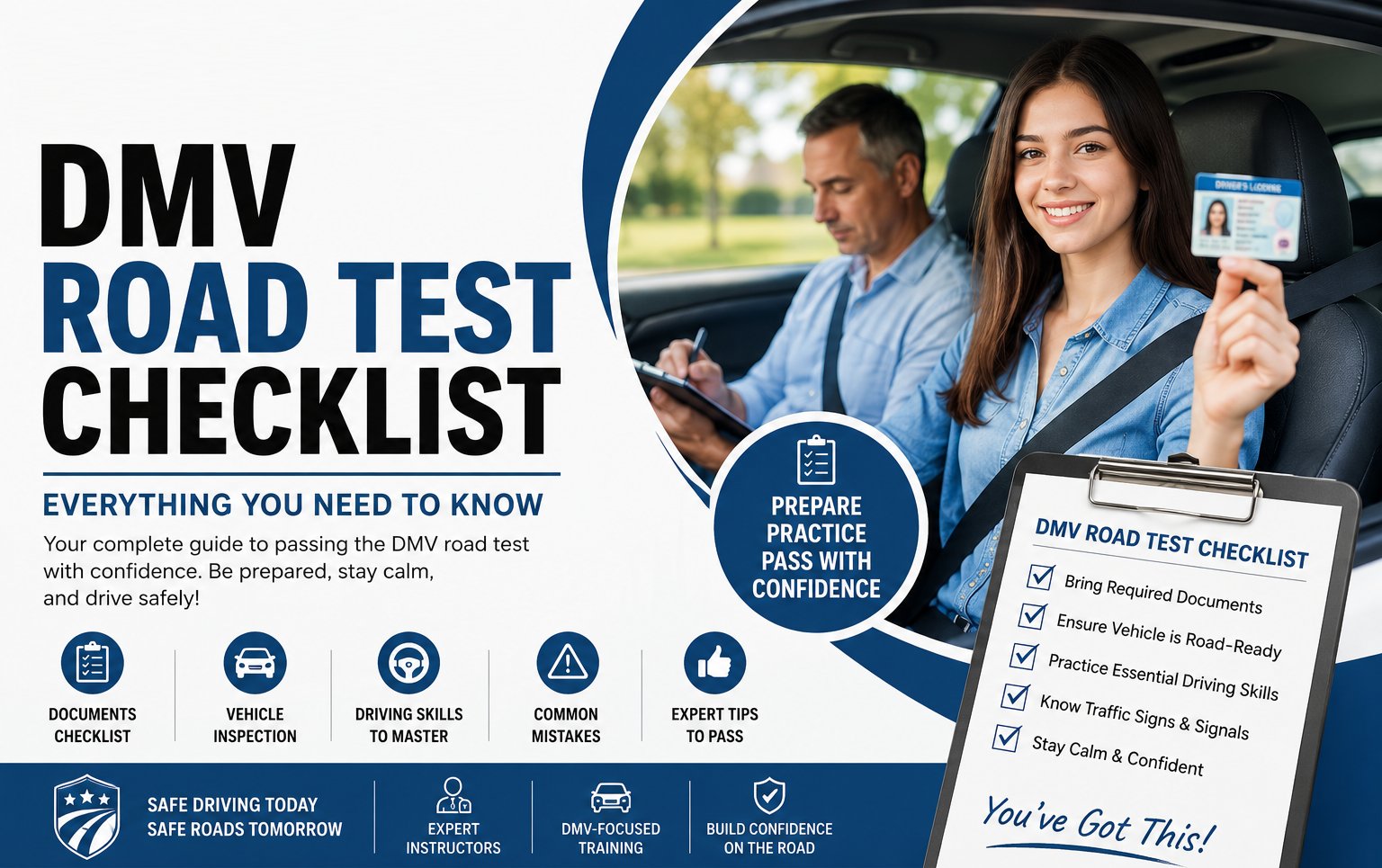
Preparing for your DMV road test is one of the most important steps toward getting your driver’s license and becoming a safe, confident driver. For many first-time drivers, the road skills test can feel stressful because it evaluates your ability to safely operate a vehicle while following traffic laws, road signs, and defensive driving practices in real-world situations.
Many drivers fail their road test because they are not fully prepared for the testing process. Common mistakes such as incomplete stops, failing to check blind spots, speeding, poor lane positioning, nervous driving behavior, or arriving without the required documents can negatively affect your score and may even result in automatic failure. However, proper preparation, consistent practice, and professional driver training can significantly improve your chances of passing on your first attempt.
At 2020 Driving School, students throughout Northern Virginia receive professional behind-the-wheel instruction designed to help them improve driving confidence, road awareness, defensive driving habits, and overall vehicle control. Proper training not only helps students pass the DMV road test but also prepares them to become safe and responsible drivers for life.
This complete DMV road test checklist explains everything you need to know before your driving exam, including learner’s permit requirements, required documents, vehicle inspection rules, important driving skills, common reasons drivers fail, and expert preparation tips that can help you succeed.
What Is a DMV Road Skills Test?
A DMV road skills test is a practical driving examination that evaluates whether you can safely operate a vehicle while following traffic laws and demonstrating responsible driving behavior. Unlike the written permit test, which focuses on road signs and driving knowledge, the road test measures your real-world driving ability in traffic situations.
During the test, the examiner carefully observes how you handle the vehicle, interact with traffic, follow instructions, and respond to changing road conditions. The examiner wants to see that you can drive safely, remain alert, make good decisions, and maintain control of the vehicle under normal driving conditions.
The road test may evaluate:
- Steering control
- Speed management
- Lane positioning
- Proper lane changes
- Use of mirrors and turn signals
- Defensive driving awareness
- Parking skills
- Stop sign compliance
- Intersection safety
- Following distance
Depending on the DMV testing location, the exam may include both public road driving and controlled driving maneuvers such as parking, backing up, or three-point turns.
The goal of the road test is not to expect perfection from new drivers. Instead, examiners want to ensure that drivers understand how to operate a vehicle safely and responsibly without creating dangerous situations for themselves or others on the road.
Learner’s Permit Requirements Before Taking the Road Test
Before scheduling your road test, drivers must meet learner’s permit and training requirements. These rules are designed to ensure that beginner drivers gain enough supervised driving experience before receiving a full driver’s license.
Drivers under 18 are generally required to hold their learner’s permit for a specific period of time before becoming eligible for the road skills test. In addition, supervised driving hours and driver education programs are often mandatory for teen drivers.
Students are typically required to complete:
- Supervised driving practice hours
- Night driving practice
- Classroom driver education
- Behind-the-wheel training
These requirements help beginner drivers develop real-world experience in different traffic conditions, weather situations, and road environments before driving independently.
Adult drivers who have never held a license may also need to meet specific permit requirements or complete a driver education course before taking the road test.
At 2020 Driving School, both teen and adult drivers receive structured training programs designed to help them meet DMV requirements while improving overall driving confidence and safety awareness.
Why a DMV Road Test Checklist Is Important
A road test checklist helps drivers stay organized and fully prepared before test day. Even skilled drivers can fail their DMV test because of avoidable mistakes such as missing paperwork, vehicle safety issues, or nervous driving behavior.
One of the biggest benefits of using a checklist is reduced stress and anxiety. Drivers who prepare thoroughly usually feel more confident because they know what to expect during the test. Preparation also helps drivers identify weak areas that need additional practice before the exam.
A complete checklist helps ensure:
- All required documents are ready
- The vehicle passes inspection
- Important driving skills are practiced
- Common mistakes are avoided
- Test-day anxiety is reduced
Mock driving tests and professional instruction can also help drivers become more comfortable under pressure while improving their overall performance.
Professional driving schools like 2020 Driving School often use DMV-focused preparation methods that help students build confidence and improve road test readiness.
- DMV Document Checklist – Before arriving for your road test appointment, it is important to make sure you have all required documents prepared and organized. Missing paperwork is one of the most common reasons road test appointments are delayed or canceled.
- Learner’s Permit – Your learner’s permit proves that you are legally authorized to practice driving before obtaining a full driver’s license. The permit must be valid and unexpired on the day of your road test.
- Appointment Confirmation – Some DMV offices require proof of your scheduled road test appointment. This may be printed or shown digitally depending on DMV procedures.
- Vehicle Registration – The vehicle used during the road test must have valid registration documents. Examiners may request to see proof that the vehicle is legally registered.
- Proof of Insurance – Valid proof of auto insurance is required for the vehicle used during the road test. Driving without insurance is illegal and may result in immediate cancellation of your appointment.
- Driver Education Certificate – Teen drivers may need proof of completion for required driver education or behind-the-wheel training programs.
- Supervised Driving Log – Some drivers may be required to provide documentation showing completion of supervised driving hours before becoming eligible for the road skills test.
Preparing all required documents ahead of time helps avoid unnecessary stress and ensures a smoother testing experience.
Vehicle Inspection Checklist Before the Road Test
Before the driving portion of the exam begins, the DMV examiner will inspect the vehicle to ensure it is safe and roadworthy. If the vehicle fails inspection, the road test may be canceled immediately.
The vehicle inspection is designed to verify that important safety systems function properly and that the vehicle can be operated safely on public roads.
- Valid Safety Inspection – Vehicles used during the road test should display a current safety inspection sticker if required by state law. Expired or missing inspection stickers may lead to cancellation of the appointment.
- Working Brake Lights – Brake lights help communicate your actions to drivers behind you. The examiner will verify that all brake lights function properly before starting the test. Faulty brake lights create dangerous driving conditions and may disqualify the vehicle from testing.
- Functional Turn Signals – Turn signals are essential for safe communication during lane changes and turns. Both front and rear signals must operate correctly.
- Proper Tire Condition – Tires should have good tread depth, Proper air pressure, No visible damage or excessive wear. Unsafe tires reduce traction and increase the risk of accidents, especially during rain or emergency braking situations.
- Functional Headlights and Taillights – The examiner may inspect following such as Headlights, Brake lights, Taillights, Turn indicators. Lighting systems are important for visibility and communication with other drivers.
- Working Windshield Wipers – Windshield wipers help maintain visibility during rain or poor weather conditions. Damaged or nonfunctional wipers may prevent the vehicle from passing inspection.
- Clean Mirrors and Windshield – Visibility is critical during the road test. Dirty mirrors, cracked windshields, or blocked visibility can create unsafe driving conditions. Always make sure: such as side mirrors are clean, Rearview mirror is adjusted correctly, Windshield is free from obstruction.
- Functional Seat Belts – Seat belts are required safety equipment and must operate properly before the test can begin.
Driving Skills You Must Practice Before the DMV Test
Passing the road test requires more than basic vehicle operation. Examiners evaluate your awareness, confidence, judgment, and ability to safely handle real traffic situations.
Smooth Steering Control – Steering control demonstrates your ability to maintain safe lane positioning and proper vehicle control.
Examiners look for:
- Smooth turns
- Stable steering
- Proper hand placement
- Ability to remain centered within the lane
Nervous drivers often overcorrect the steering wheel, which can negatively affect their score.
Proper Lane Changes – Lane changes are one of the most important parts of the road test because they demonstrate awareness and defensive driving ability.
A proper lane change includes:
- Checking mirrors
- Activating the turn signal
- Checking blind spots
- Moving smoothly into the next lane
- Canceling the signal afterward
Failing to check blind spots is one of the most common driving test mistakes.
Complete Stops at Stop Signs – Rolling stops are among the most common reasons drivers fail the DMV road test.
A complete stop means:
- The vehicle fully stops moving
- You stop behind the white line
- You look carefully in all directions
- You proceed only when safe
Intersection safety is extremely important because many accidents occur when drivers fail to stop properly.
Speed Management and Following Distance – Maintaining safe speed demonstrates good judgment and responsible driving behavior.
Drivers should:
- Follow posted speed limits
- Adjust speed for weather and traffic conditions
- Maintain safe following distance
- Avoid sudden braking or acceleration
Driving too fast or too slowly can both negatively affect your score.
Parking and Vehicle Maneuvering – Some road tests include parking and maneuvering evaluations such as:
- Parallel parking
- Backing up
- Three-point turns
- Parking lot awareness
These maneuvers require practice, patience, and confidence. Many drivers struggle with parking because they rush movements or fail to use mirrors correctly.
Professional instructors at 2020 Driving School help students practice parking techniques step by step until they feel comfortable performing them independently.
Defensive Driving Skills Examiners Look For
Defensive driving is one of the most important parts of safe driving and plays a major role during the road test.
Defensive drivers remain alert, anticipate hazards, and make safe decisions before dangerous situations develop.
Examiners want to see drivers:
- Scan intersections carefully
- Watch for pedestrians
- Monitor surrounding traffic
- Check mirrors regularly
- Maintain safe space around the vehicle
- Anticipate sudden traffic changes
Defensive driving shows maturity, awareness, and good judgment behind the wheel.
Drivers who remain calm and focused during the test usually perform better than drivers who panic or overreact under pressure.
Common Reasons Drivers Fail the Road Test
Understanding common mistakes can help drivers avoid them during the exam.
- Rolling Stops – Many drivers slow down without fully stopping at stop signs. Examiners consider this unsafe because it increases accident risk at intersections.
- Failure to Check Blind Spots – Examiners carefully observe head movement during lane changes and turns. Mirrors alone are not enough because blind spots exist around every vehicle.
- Speeding – Driving above the speed limit demonstrates unsafe judgment and may result in automatic failure.
- Distracted Driving – Looking away from the road too often or becoming distracted during the exam negatively affects performance.
- Poor Lane Positioning – Drifting between lanes or driving too close to lane markings demonstrates lack of vehicle control.
- Nervous Driving Behavior – Sudden braking, hesitation, panic steering, and overcorrection often indicate lack of confidence. Mock driving tests can help drivers become more comfortable with the testing process.
Benefits of Professional Driving Lessons
Professional driving lessons provide structured instruction that helps drivers prepare effectively for the road skills test while developing long-term safe driving habits.
At 2020 Driving School, certified instructors help students improve:
- Defensive driving skills
- Vehicle control
- Parking ability
- Road awareness
- Lane changes
- Traffic judgment
- Driving confidence
Professional instruction helps drivers correct mistakes early and develop safer driving habits through repeated practice and expert guidance.
Mock DMV road tests are especially helpful because they simulate real testing conditions and reduce anxiety before the actual exam.
Students who receive professional training often feel more confident and prepared during the road test because they understand exactly what examiners expect.
Final Thoughts
Passing the DMV road test requires preparation, practice, patience, and confidence. Understanding permit requirements, preparing your documents and vehicle, and practicing essential driving skills can significantly improve your chances of success.
A complete DMV road test checklist helps drivers stay organized, reduce stress, and avoid common mistakes that often lead to failure. From proper lane changes and parking maneuvers to defensive driving awareness and stop sign compliance, every detail matters during the road skills examination.
Whether you are preparing for your first driving test or looking to improve your overall driving ability, 2020 Driving School provides professional DMV-focused driver education designed to help students become safe, confident, and responsible drivers ready for success on the road.