
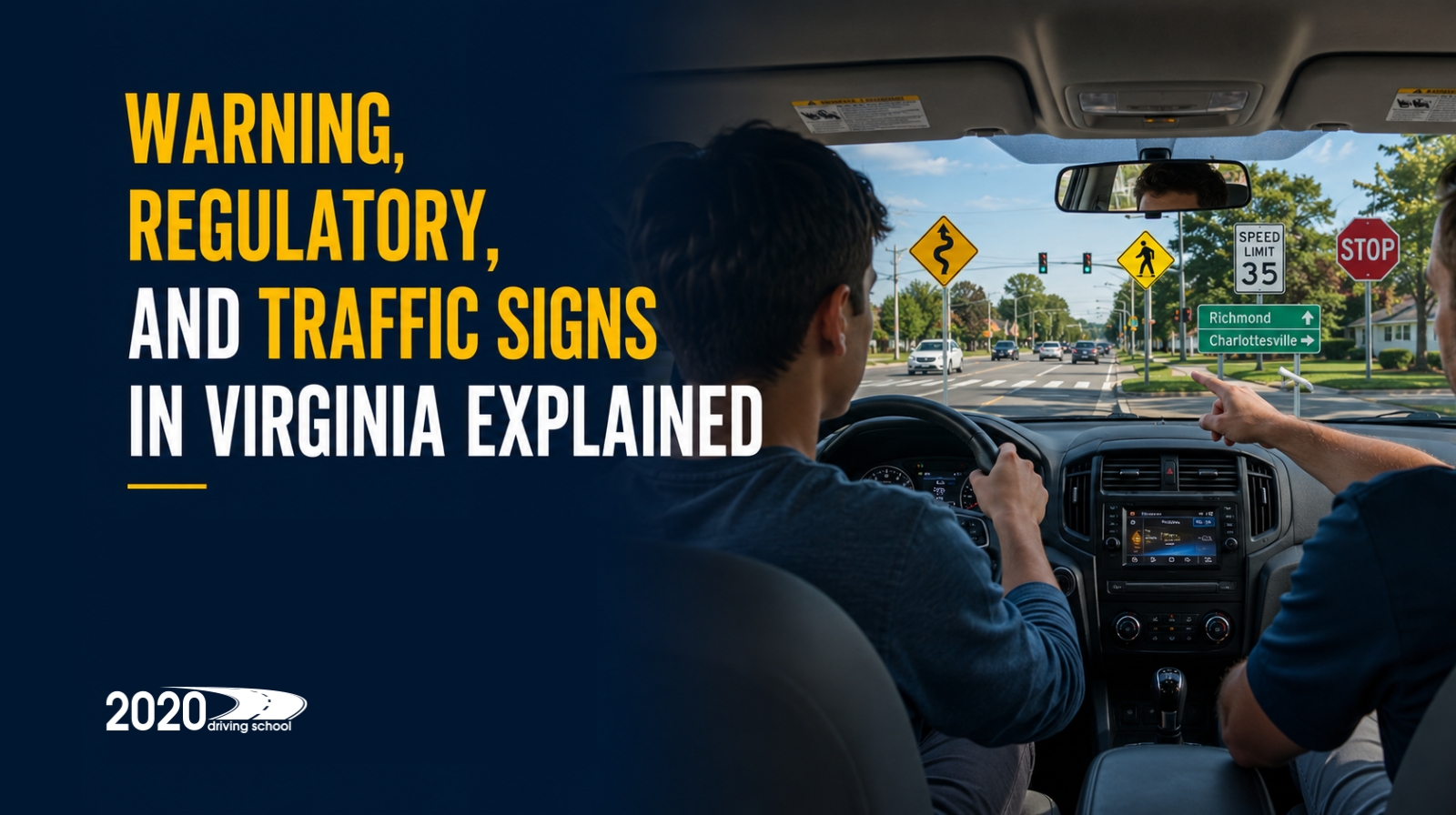
Virginia traffic signs fall into a few main categories: regulatory signs (tell you what you must or must not do), warning signs (alert you to hazards or changes ahead), and guide signs (provide directions and information). Shape and color are your fastest clues: yellow diamonds warn, red means stop or prohibition, and green typically guides.
Road Sign Categories in Virginia
- Regulatory signs, typically white or red, tell drivers what’s required or prohibited (stop, yield, speed limit, no turn).
- Warning signs: Typically,y yellow diamonds alert drivers to hazards, changes in road conditions, or upcoming situations like curves or crossings.
- Guide signs: Typically green or blue—provide directions, distances, and service information.
- Pennant-shaped signs: A specific warning sign marking the start of a no-passing zone — see our full breakdown of what pennant-shaped signs mean.
One of the key parts of becoming a safe and responsible driver is having a clear understanding of Virginia road signs. Whether it is someone who is preparing for a learner’s permit test, attending a driving school, or simply refreshing their driving knowledge, when you recognize the traffic signs, it becomes safer and less confusing on the road. Each sign has been designed to communicate important information quickly, which allows the driver to react appropriately to the changing conditions of traffic, hazards, and legal requirements. The road signs in Virginia have been divided into 3 major categories: warning signs, regulatory signs, and guide or traffic signs. By understanding the purpose of each category, you are able to make it safer to drive.
Warning Signs Alert Drivers to Potential Hazards
Warning signs are used to warn drivers of upcoming road conditions or danger. These signs are typically yellow or orange in color with black symbols or lettering and are easy to see from a distance.
Many Virginia road signs in the warning category assist the driver in modifying their speed or driving behavior in advance of dangerous areas. Warning signs, such as curves, signal drivers to turn aggressively, and traffic flow signs warn when traffic patterns are changing, such as when merging into or out of a lane.
Some common warning signs drivers encounter in Virginia include:
- Pedestrian crossing signs
- Deer crossing signs
- Slippery when wet signs
- School zone warnings
- Railroad crossing alerts
Construction zone warning signs are also very crucial. Orange signs are used to mark temporary hazards or changes in traffic due to road work. Always reduce speed and be alert in construction zones, as lane changes and lower speed limits may occur.
Knowing the signs of danger can help drivers make better decisions in advance of a dangerous situation.
Regulatory Signs Communicate Traffic Laws
Regulatory Signs instruct drivers on what they are permitted or not permitted to do when driving. These signs are legally binding, and a failure to follow them could lead to traffic citations, fines, or accidents. The majority of regulatory signs in Virginia are white with black or red text and symbols. These signs contain instructions about speed, lane use, stopping, and parking.
Stop signs, yield signs, and speed limit signs are a few of the most well-known signs. Signs include stop signs, which should be obeyed by stopping before safely proceeding, and yield signs, which mean that drivers must yield the right-of-way if they are required to do so.
Additional regulatory signs commonly found on Virginia roads include:
- No U-turn signs
- One-way traffic signs
- No parking zones
- HOV lane restrictions
- Do not enter signs
Regulatory signs play a critical role in traffic flow and roadway safety, and are the most important signs for drivers to look at. Failure to take these behavior indicators into account can lead to more accidents and hazardous driving conditions for other people.
Guide and Traffic Signs Help Drivers Navigate
Guide signs give direction and help the driver navigate unfamiliar roads, highways, and cities. Often green, blue, or brown, depending on the purpose. Highway exits, route numbers, street names, and distances are commonly found on green guide signs. Blue road signs usually denote services for travelers, like gas stations, hospitals, lodging, or rest areas. Brown signs are generally used for parks, recreation facilities, or historic sites.
A lot of Virginia road signs are created to assist motorists in better navigating the busy highway system. In urban areas with complex traffic flow, interstate signs, directional arrows, and lane guidance signs are particularly critical. Other signs for traffic control are traffic lights, pedestrian crossing signs, and lane control systems. All drivers should be alert for them and follow the respective signs and signals to ensure no collisions or traffic violations occur on a regular basis.
Why Learning Virginia Road Signs Matters
The knowledge of road signs is crucial for all drivers, whether novice or expert. Road sign recognition is one of the most important portions of the written DMV exam for teens who are taking the test for their driver’s license. A lot of permit applicants have a problem because they have to recite the answers without actually knowing what the signs are.
It would be beneficial for experienced drivers to check out the Virginia road signs, especially because the regulations and traffic patterns might change from time to time. Being aware of the latest information is crucial for drivers to maintain safety and confidence on the road. Knowing the road signs also helps develop defensive driving. Quickly identifying signs allows drivers to be better prepared to respond to hazards, adjust driving speed, and make safe decisions in traffic.
Learners develop confidence by learning traffic laws, identifying road signs, and safe driving techniques from professional driving schools like 2020 Driving School.
Tips for Memorizing Virginia Road Signs
Road signs are easier for new drivers to remember by looking at the color, shape, and pattern of the symbols. For instance, octagon-shaped signs are always stop signs, and triangle-shaped signs are typically yield.
A few effective study tips include:
- Reviewing DMV road sign charts regularly
- Taking online practice permit tests
- Studying sign categories separately
- Practicing identification while riding in a vehicle
Regular practice will enhance recall and help drivers act appropriately in real-life scenarios.
Knowing the meaning of Virginia road signs is not just vital to passing the driving test but also for being a better, safer, and more responsible driver. The knowledge of the warning, regulatory, and traffic signs allows drivers to approach Virginia roads with confidence and awareness. Want assistance with your written test? Call you today and book your seat with 2020 Driving School.
FAQs
What are the main categories of Virginia road signs?
The main categories are warning signs, regulatory signs, and guide or traffic signs.
What color are warning signs in Virginia?
Most warning signs are yellow or orange with black symbols or lettering.
Why are regulatory signs important?
Regulatory signs communicate traffic laws and rules that drivers must follow for safety and legal compliance.
How can I study Virginia road signs for my permit test?
You can study DMV manuals, practice tests, road sign charts, and driving school materials to improve recognition and understanding.
What happens if drivers ignore traffic signs?
Ignoring traffic signs can lead to accidents, traffic violations, fines, and unsafe driving conditions.
What do the different traffic sign shapes mean?
Shape is a quick visual cue: octagons mean stop, triangles mean yield, diamonds warn of hazards, and rectangles are typically regulatory or guide signs.
What’s the difference between a warning sign and a regulatory sign?
Warning signs (yellow) alert you to something ahead, like a curve or crossing. Regulatory signs (white or red) tell you what you must legally do, like stop or observe a speed limit.
 1. Personalized Skill Development
 2. Test-Ready Results
 3. Flexible & Convenient Learning
 4. Safe & Professional Training