
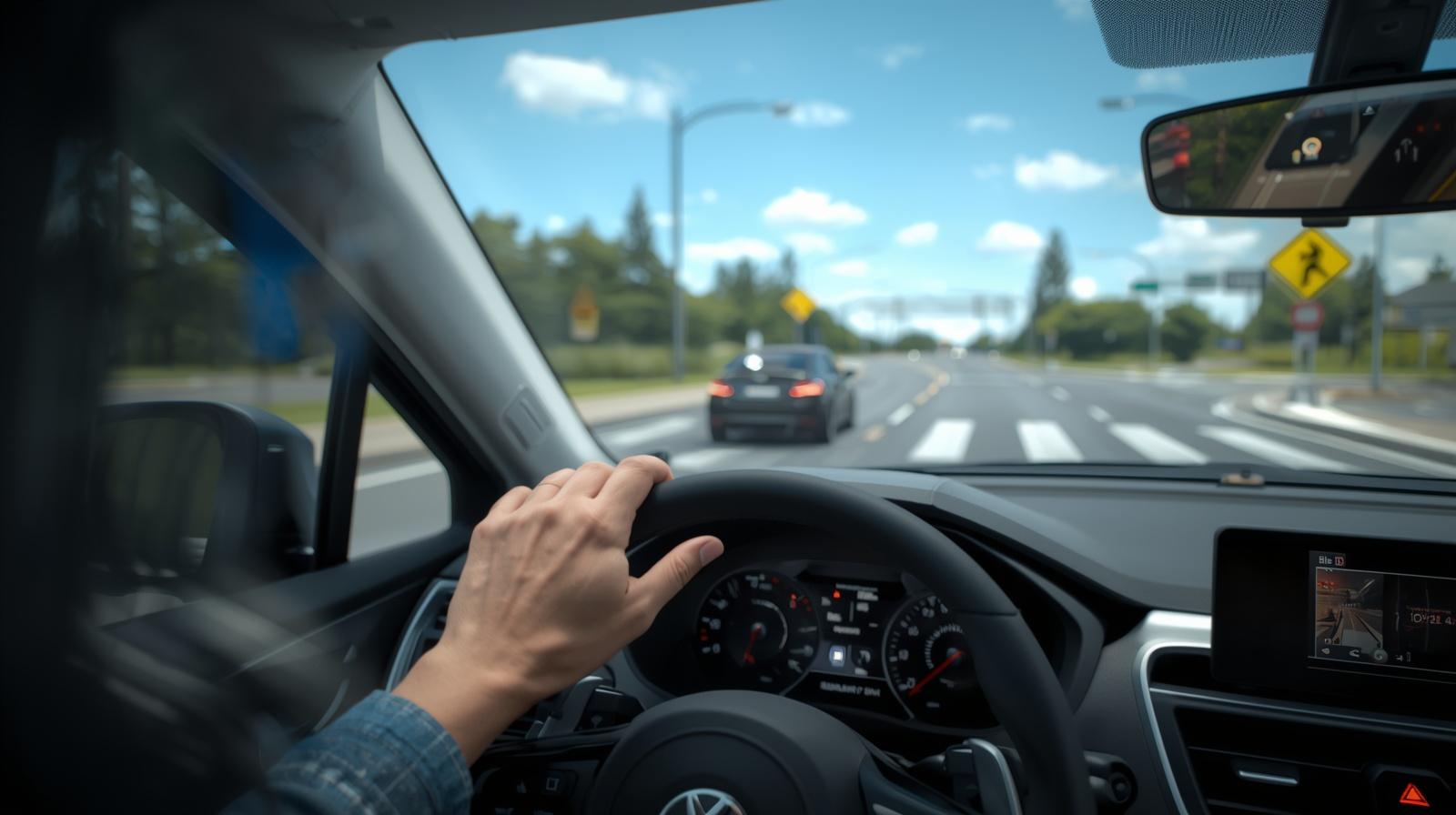
To use a turn signal correctly, activate it well before you turn or change lanes, hold it through the maneuver, and make sure it turns off afterward. Signaling early gives other drivers time to react, which is exactly what road-test examiners and safe drivers alike are checking for.
Steps for Using Turn Signals Correctly
- Check your mirrors and surroundings first: Before signaling, check your mirrors and blind spots to make sure the maneuver is safe.
- Signal early: Activate your turn signal well before making a turn or changing lanes. Follow the specific signaling distance or timing required by Virginia law and your driving curriculum.
- Complete the maneuver: Turn or change lanes smoothly while keeping the signal active.
- Turn the signal off: If your vehicle does not automatically cancel the signal, turn it off manually after completing the turn or lane change.
- Avoid common mistakes: Always signal for turns and lane changes, and make sure your signal is off after completing the maneuver so other drivers are not misled.
Turn signals seem simple. You flip a lever, a light blinks, you move the car. Done. Except not really.
Improper signaling is one of the most common reasons drivers fail road tests and get into minor accidents. It is also one of the most preventable mistakes. If you have ever wondered exactly how to use turn signals the right way, this guide breaks it down in practical terms. No guesswork. Just clear steps.
At 2020 Driving School, instructors see this issue constantly. Good drivers forget to signal. Nervous drivers signal too late. Some signal and never turn. All of that creates confusion.
Let’s fix it.
Why Turn Signals Matter More Than You Think?
Turn signals are communication. That’s it. They tell other drivers what you intend to do before you actually do it.
Imagine walking through a crowded hallway and suddenly changing direction without warning. People bump into you. Someone gets annoyed. Someone else spills coffee. That is exactly what driving without signaling feels like to other motorists.
When you signal properly, you reduce surprises. You reduce risk. And you lower stress for everyone around you.
Step 1: Signal Before You Slow Down
This is where many drivers go wrong. They brake first, then signal while already halfway into the turn.
Instead, you should activate your turn signal at least 100 feet before turning in normal traffic. That gives others time to process your intention.
Think of it as giving notice. You are politely saying, this is what I’m about to do.
Delaying that signal forces drivers behind you to react abruptly. That increases rear end collisions and frustration.
Step 2: Signal Every Time You Turn
That includes:
- Turning at intersections
- Turning into driveways
- Turning into parking lots
- Pulling away from a curb
Many drivers skip signaling in parking lots or residential streets because traffic feels light. But pedestrians and cyclists rely on signals too.
Consistency builds safe habits. If you only signal when you remember, you will forget during high pressure situations.
Step 3: Signal When Changing Lanes
Lane changes are where signaling is most important.
Before changing lanes:
- Check mirrors
- Check blind spot
- Then signal
- Then move
Yes, the order matters.
If you signal before checking mirrors, you might signal into an occupied lane. If you change lanes before signaling, you are basically cutting someone off.
You should activate your turn signal, confirm the lane is clear, and then move smoothly.
Not rushed. Not aggressive. Smooth.
Step 4: Cancel the Signal After Completing the Turn
This seems obvious, but it causes problems.
Driving with your signal blinking after completing a turn confuses nearby drivers. They might slow down expecting another movement.
Always check that your signal has automatically canceled. If it hasn’t, turn it off manually.
A forgotten signal is almost as distracting as no signal at all.
Step 5: Signal Even When You Think No One Is Watching
Drivers often skip signaling because they believe no one is around.
But someone usually is. A pedestrian. A car coming from behind faster than expected. A bicyclist in your blind spot.
Using signals consistently removes that guesswork.
If you always signal, you never have to decide whether you should. It becomes automatic.
Common Signal Mistakes
Students frequently make these errors:
- Signaling too late
- Forgetting to signal when leaving a parking space
- Not signaling during test pressure
- Leaving the signal on accidentally
- Signaling and turning immediately without pause
These are small habits that carry big consequences during road tests.
In fact, at 2020 Driving School, instructors spend a surprising amount of time correcting signal timing because it directly affects safety evaluations.
What Examiners Look For
During a driving test, examiners pay close attention to signaling behavior.
They look for:
- Early signaling
- Visible confirmation before lane changes
- Consistent use during every maneuver
- Proper cancellation after turning
Forgetting to signal once might not fail you immediately. Repeated failures can.
More importantly, signaling shows awareness and discipline. It signals that you are thinking ahead, not reacting late.
Driving in Fredericksburg and Meeting Virginia DMV Expectations
If you are preparing for your road test in Fredericksburg, remember that proper signaling is something Virginia DMV examiners watch closely. Local traffic can include busy intersections, shopping center entrances, and steady commuter flow. Clear signaling helps manage those conditions safely.
At 2020 Driving School, students preparing for Virginia DMV testing practice early and consistent turn signal use so it becomes automatic before test day. Developing that habit in real Fredericksburg traffic builds confidence and helps ensure you meet Virginia DMV safety standards without hesitation.
Final Thoughts
Learning how to use turn signals correctly is not complicated. But doing it consistently takes practice. It is about timing, awareness, and making signaling an automatic habit.
You should activate your turn signal early, clearly, and every time you change direction. No exceptions. Even short trips deserve full communication.
Clear signaling prevents accidents, lowers stress, and improves your driving test performance. It is one of the easiest ways to show that you are in control of your vehicle and aware of others on the road.
And honestly, good drivers signal because they respect everyone sharing the road. That small blinking light speaks volumes.
FAQs
Q: How early should you turn on your turn signal?
A: Signal well before you begin the turn or lane change. Early signaling gives surrounding drivers time to react, which is one of the most common things road test examiners check.
Q: Do you need to signal if no other cars are around?
A: Yes, signaling is a habit that examiners and safe drivers maintain every time, regardless of visible traffic, since it’s easy to miss a vehicle in a blind spot.
Q: Why do examiners deduct points for signal mistakes?
A: Forgetting to signal, signaling too late, or leaving a signal on are common, easily avoidable errors that indicate inconsistent habits, which is exactly what road test examiners are trained to catch.
 1. Personalized Skill Development
 2. Test-Ready Results
 3. Flexible & Convenient Learning
 4. Safe & Professional Training