Keeping Your Ride in Top Shape

Preventive maintenance

During our New Driver Vehicle Orientation class, as well as Driver’s Ed, the importance of vehicle maintenance is reviewed in detail. Keeping your ride in tip top shape is not only key to its health, preventing expensive repairs and embarrassing breakdowns, but also for safety of you and others.

Faulty brakes, steering and suspension components, tire blow outs and burned out lights all combine in causing crashes on today’s roads.  Even a cracked windshield can have a negative impact.

There’s no argument that today’s cars and trucks are safer than ever before, but one must keep in mind that in the end it’s a machine, and machines tend to break.  The saying goes that prevention is cheaper than repair, and we’re here to tell you it’s true.  At 2020 Driving School, we have more than a dozen cars in our fleet. Keeping this many on the road and in good condition is time consuming and expensive. But along the way, we’ve learned that if the basics are kept up with, the likelihood of problems is minimal.  So yes, we’ve verified that the adage about prevention is true!

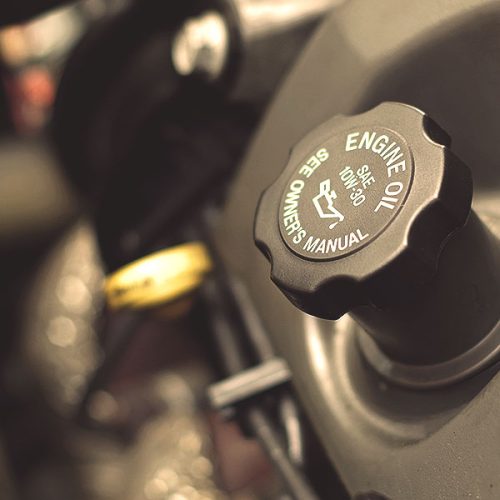
Oil changes, tire rotations, replacing lights and wipers, all may seem like costly distractions, but for drivers, especially those that are new, they must be kept up with.  Here in Virginia, with the annual safety inspection, in some cases you don’t really have a choice when it comes to spending money on your car (plus, who wants to drive around with that embarrassing pink sticker on their windshield when they fail?).

It’s more than must “gas and go”

When working with new drivers, we like to remind them of the costs of owning and/or operating a vehicle.  Gas and insurance are common answers when we ask students what they think will be an expense for them when they receive their driver’s license.  Both of these are correct, and we remind them of the maintenance aspect, too.  In most cases, basic car maintenance isn’t free, even when your car has a warranty.

Properly budgeting out these costs and staying up-to-date with needed service should always be remembered.  We tip our hat to the parents of teenagers that make their son or daughter bear these costs, as it’s a great life lesson on money and organizational skills.
virginia-teen-driver-preventive-maintenance

Get a good start

We encourage all new drivers, regardless of age, to attend our vehicle orientation class, which dives deeper into understanding modern cars and their maintenance needs. You can learn more about this course here.


Return to article list

Concerns of New Drivers

What are your fears or anxieties?

The vast majority of students we work with for in-car instruction, whether it be with Behind the Wheel or Private Lessons, fear most interstate highway driving. This continues to amaze us from a numbers standpoint since the overwhelming majority of vehicle crashes in Virginia occur on non-interstate roads. In fact, last year, more than 80% of crashes occurred off of Virginia’s interstate routes.

When we ask why, the answers typically revolve around the rate of speed, other motorist’s behaviors and larger vehicles (tractor-trailers). Armed with this information, we provide tips, insights and experience to these new drivers on how to mitigate risks, stay alert, maintain safe following distances, the importance of using turn signals and much more to help build their confidence.  Timing here is key, as most know our region is prone to horrendous traffic jams and delays. Finding that window where one can travel at the posted speed limit for an extended period of time is a challenge we face daily, but is a crucial part that must be done.  This is why for parents of new drivers, practicing driving on I-95 with your teen while they hold their Learner’s Permit undoubtedly has a major impact on improving their overall driving skills.

Diving into the concerns of new drivers, we explain that there’s really not a lot one can do to control another’s actions and behaviors. We’ve all seen it (and hopefully haven’t done so ourselves!) where one tailgates another, abruptly changes lanes, slams the brakes for no apparent reason, changes lanes without signaling and on and on the list goes.  Our advice is to stick to the basics, such as keeping a safe following distance, avoid distracting behaviors, such as texting, eating or drinking, being aware of your surroundings and maintaining a safe speed in line with the posted limit.

Why experience matters

While many of our Behind the Wheel students have some experience driving in I-95, we’ve found this to be far less than their experience traveling on neighborhood streets or connecting routes.  This comparatively shorter amount of time driving no doubt plays a major role in their fear factor.

For most of our Private Lesson students, however, most have never travelled on an interstate highway and therefore have no experience at all, which drives the anxiety and fear levels up tremendously. We observe this constantly as we watch the new driver repeatedly wiping their sweaty palms on their pants as they merge or travel.

new-driver-concerns-small

Get a good start

Are you a current Learner’s Permit holder preparing for Behind the Wheel, or parent of one?  Our Private Lessons may be of great value to you in building experience and confidence when it comes to driving in different conditions, on different roadways. Let’s face it. These days everyone is tight on time, with busy schedules and places to be. Leave it to the experts to help with this training, which will pay off big time in the long run.

In the end, we do everything we can to help new drivers of all ages overcome their fears and anxiousness, helping to prepare them for the road ahead.

Return to article list

Driving to School This Year?

No More Asking for Rides!

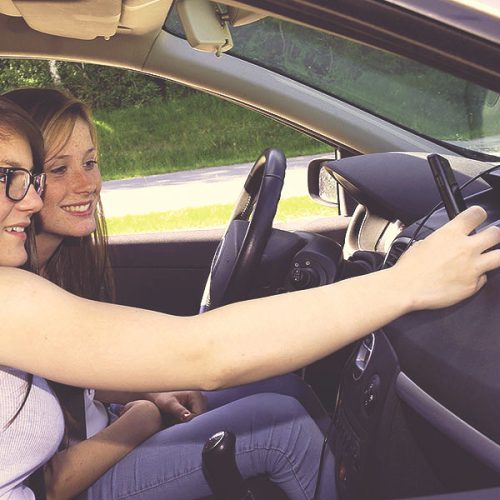
If you’ve recently completed Behind the Wheel and have earned your license, congrats!  We know what you’re thinking, we’ve all been there before. No longer will you be stuck riding the bus or hitching rides with friends or family. Now you have a sense of freedom, more time (which, we can tell you, isn’t necessarily the case), and a social status that you haven’t had before since you’re now a driver.

But as school starts and the pressures of teenage years return to full swing, understanding the responsibilities you have when driving not only to yourself, your passengers and others is crucial.

One must always remember and keep top of mind the lessons learned during Driver’s Ed and Behind the Wheel, which can easily go by the wayside as you hit the road.  When doing follow-ups with our past students, we always like to remind them not to fall into the peer pressure trap, to never take things for granted and that the statistics aren’t exactly in their favor.

There Will be Ups and Downs

Being a teenager today, as it has throughout previous generations, is full of ups and downs, struggles, excitement, good times and bad. Alcohol and driving was the scourge of new teen drivers in the past. These days, being distracted while in the driver’s seat is plaguing many motorists, not just those that are your peers.  Social media and music apps, email and text messaging and built-in electronics in today’s cars pose a whole new set of challenges for teens.

It cannot be stressed enough that you, as a driver, have the tremendous responsibility of safety. You’re operating a several thousand pound object, traveling at speeds effected by the laws of physics, constantly making decisions.  Being on the lookout and staying alert are amongst your top priorities, especially if you will be driving to school for the first time this year.  As was taught in Driver’s Ed and Behind the Wheel, pay extra attention in parking lots as pedestrians can literally come out of nowhere, other vehicles are turning and reversing, and other drivers may be distracted.  Remember, more than 20% of all crashes that occur in the U.S. happen in parking lots.

Stay in Control

Wanting to show off?  It’s understandable, most new drivers do when pulling into school. But keep in mind while you’re whipping through the lot that you are in a school zone, where speed limits are generally reduced.  Our law enforcement friends tell us constantly of teen drivers ticketed for speed-related offenses nearby or on actual school grounds.  In Virginia and under 21, this is a quick way to end up in a Driver Improvement Class.

Controlling emotions (and your car for that matter) will no doubt be difficult for you.  Being a safer, smarter driver starts with doing what is right, 100% of the time.  Steering clear of the wrong decisions may not be the cool thing to do, but why risk it?  Ultimately, you’re responsible for your actions whenever you’re driving, and others are counting on you.

So once again, congratulations on earning your Virginia driver’s license, and good luck with the new school year!  Just please, please keep in mind the responsibilities you have as a driver and avoid the behaviors that could possibly put you and others at risk.

FriendsDrivingToSchool

Return to article list

Disclaimer: Home and school pickup/drop-off may be available for students located in Fredericksburg, Spotsylvania, and Stafford. Eligibility depends on your exact address, distance, and instructor availability, as most instructors are based within these areas. If your location falls outside our service range or beyond our pickup radius, you will be assigned a designated pickup location. Please refer to our pickup locations here. For confirmation of eligibility, we recommend calling our office before scheduling.

The Virginia DMV is committed to promoting transportation safety through the certification of quality driver training programs. If you have comments or concerns about this driving school, call the DMV toll-free number: (877) 885-5790

Call Us
+1 540 841 6327
Inquiry Now