
Car Infotainment Systems…A Blessing or a Curse?

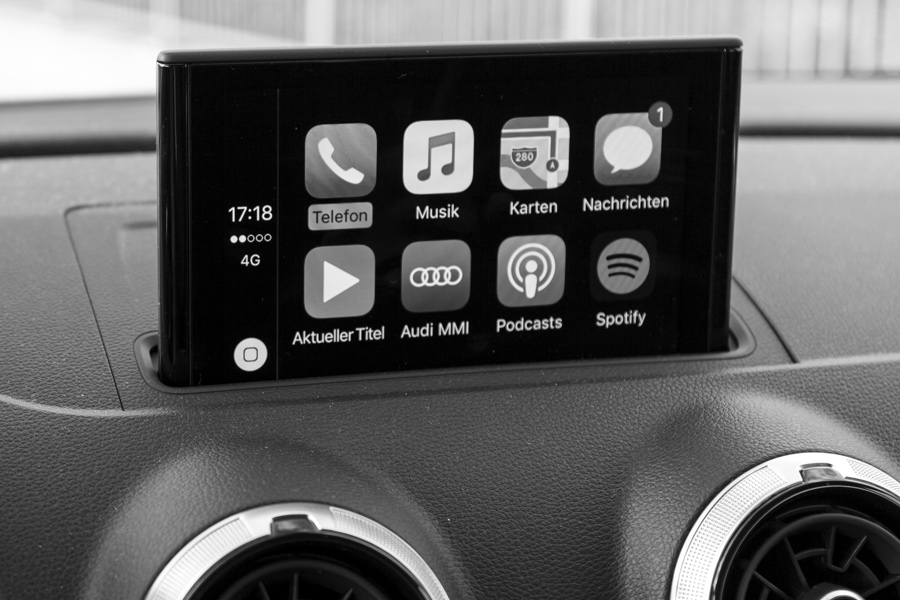
Over the past decade, the technological advances in modern automobiles has been astounding.  Cars today are equipped with Bluetooth connectivity, telematics, built-in touch screen displays, navigation, wireless hotspots, collision avoidance, backup cameras, backup sensors, blind spot indicators, active cruise control and the list goes on and on.  But do all of these gadgets, gizmos, features and capabilities translate to safer driving?  Perhaps yes, perhaps no.

More and more studies have shown that telematics and integrations in cars have actually made them unsafe, easily creating distractions and false senses of safety and security.  Talking on a cell phone either with the device up to your ear or through an integrated Bluetooth system may be equally distracting.  Talking through your Bluetooth integration to send a text message rather than manually typing it may be equally distracting.  Listening to step-by-step navigation through your car’s speakers as opposed to your phone or portable GPS unit may be equally distracting.  Time and additional research will show.  For now, however, lets look at what we know today.

Recently, during a behind the wheel session, a student was having difficulty remembering to check their surroundings and mirrors constantly as they were backing up in reverse.

When corrected by their instructor, they responded, “Sorry, I’m not used to looking in the mirror because my mom’s car has a camera that I can look at on the dash.”

Yes.  This may be the case.  However, that camera has a narrow field of view, and what that camera doesn’t show you is the 5,000 pound truck that is approaching.  Nor does it show you the family walking only a few steps away with small children.  So yes, the backup camera does help, but it doesn’t replace the basics of looking around and being aware of your surroundings when placing the car in reverse.
dash infotainment small

In another example, a teen student was in the driver’s seat for his first driving period of behind the wheel.  When he went to make a lane change, he didn’t look over his shoulder as he moved to the left.  The instructor immediately commented.  The teenager’s response: “Oh, I’m used to the little yellow triangle showing up in the mirror if there is a car in the blind spot.”

Again and again, we see examples and have to make corrections for what would be considered normal practices not being performed because a student is counting on technology to help them perform a task.

We try to instill in our students during private lessons and behind the wheel the fact that today’s technology is merely an additional tool, which is to be combined with other basic skills, to help them driver safer and smarter.  These gadgets are not, and should not, be considered as a replacement for looking, using common sense and making judgements and decisions based on conditions oneself.

We fear we are facing an uphill battle, however.  As driver assistance technology increases and advances and the reliance upon it continues, bare bones, basic skills such as looking twice before changing lanes or fully checking your surroundings before backing out of a parking spot will be viewed as outdated and monotonous.  We won’t give up, however, as too much is riding on making sure the proper skills are taught and understood.
Return to article list

Driving: Is Your Teen Ready?

We ask a simple question every time a parent is asking to sign their teenage son or daughter up for behind the wheel:  “On a scale of one to five, how would you rate their ability to drive?”  Often, the answer is two or three.  Rarely does someone answer five, and more often than not, the answer is one.

This question is posed for a number of reasons.  First, we want to hear from the parents how they feel their son or daughter is doing and what their capabilities are.  Secondly, we ask as a gauge to let our instructors know beforehand what they can expect so that they can prepare.  Lastly, we ask because we want to stir up thoughts about a teen’s true driving abilities.   The statistics are sobering.  Automotive crashes remain a top cause of death for teens, distracted driving is on the rise, the hustle and bustle of daily life is increasing.

Too many factors are now in play that can have a negative impact on a teenager’s ability to properly learn the rules of the road, such as safe, defensive driving techniques and the ability to not be influenced by peer pressure to take unnecessary risks.

There’s a tremendous difference between a car a professional is driving during a Sunday afternoon race, and a car that was purpose built as a commuter vehicle to get you up and down the interstate, back and forth to work.

The proliferation of technology, such as small, high definition video cameras found on smart phones and from brands such as GoPro, and the ability to quickly post videos on the internet, has turned far too many drivers into daredevils.  The internet (YouTube, especially) is full of videos of dangerous, and often illegal, driving activity by drivers young and old.

Unfortunately, many young drivers don’t make the connection that the driving they may see on TV during a NASCAR race is being performed by professionals, with years of training and experience, in highly-complex machines built specifically for the track they are on.  There’s a tremendous difference between a car a professional is driving during a Sunday afternoon race, and a car that was purpose built as a commuter vehicle to get you up and down the interstate, back and forth to work.

So we ask this question during the initial enrollment to not only get a gauge, but to also help parents honestly consider their child’s physical driving skills, as well as their mental maturity behind the wheel.  We prefer to get an honest answer.  If the parent believes the skills are low, we want to know.  If they feel they are good, we want to know that too.  If they believe there are areas for improvement, we want to know about them.

Sometimes, private driving lessons with one of our professional instructors may be a better step as opposed to immediately starting behind the wheel.  This gives us the opportunity to spend more time talking to your son or daughter, getting their input and feedback, hearing their concerns and working with them to develop their skills.

We fully understand teens are eager and excited to start driving.  They’ve waited for sixteen years to do so, but, if it means improving their safety (and that of others), a few more weeks or months won’t hurt.

Visit our Private Lessons page or contact us directly for more information and to learn more about what we can do to help your teenage son or daughter prepare for the road ahead.

Return to article list

The Virginia DMV is committed to promoting transportation safety through the certification of quality driver training programs. If you have comments or concerns about this driving school, call the DMV toll-free number: (877) 885-5790

Call Us
+1 540 841 6327
Enroll Now